


Lido extracts charges from freight invoices and compares them against your contracted rates. Overcharges and billing errors are flagged before payment.
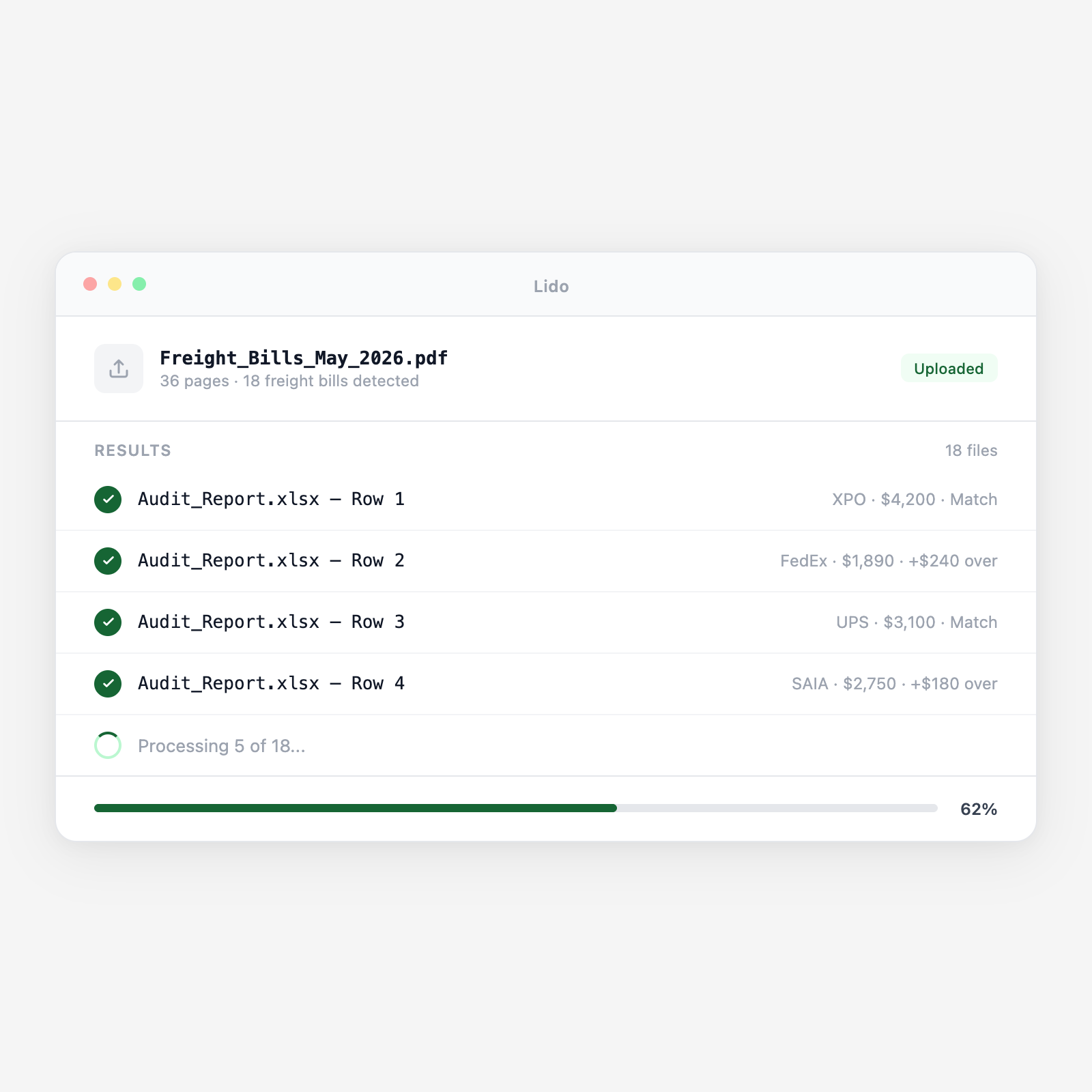






Carrier billing error rates run 5-15% of freight spend. Lido audits every invoice against contracted rates automatically.
Freight invoices arrive as PDF email attachments, EDI 210 transactions, or carrier portal downloads. Lido processes all three input types in the same audit pipeline.
PRO number, carrier SCAC, shipment date, origin/destination zips, service level, linehaul, fuel surcharge, and every accessorial charge line are extracted. Totals, discounts, and credits included.
Each charge is matched against your carrier contract rate table by SCAC, service level, lane, and weight break. Fuel surcharges are validated against the carrier's published FSC index for the shipment date.
Unauthorized accessorials are flagged separately from rate variances. Common catches: residential delivery on commercial addresses, liftgate not requested, detention beyond contractual free time.
Every flagged charge produces a dispute-ready line: invoice number, charge type, billed amount, contracted amount, variance, and dispute basis. Clean invoices are approved for payment without manual review.
Upload a batch and get structured output in minutes.
National and regional LTL freight bills. Class-rated and FAK structures both extracted and audited.
Full truckload invoices for dedicated and spot loads. Linehaul, fuel, and accessorials extracted from any format.
Weekly billing statements with per-shipment breakdowns. Address corrections, residential surcharges, and DIM weight errors audited.
Container drayage invoices with per-diem, chassis fees, and port congestion surcharges compared against contracted rates.
Rail linehaul and dray components extracted and audited separately from intermodal carrier invoices.
Multi-service forwarder invoices covering ocean freight, origin/destination charges, customs, and handling. Each component extracted.
| Feature | Lido | Manual audit |
|---|---|---|
| Extract all charge components from any carrier freight invoice format | ✓ | ✗ |
| Compare every charge against contracted rates per carrier and lane | ✓ | ✗ |
| Flag unauthorized accessorials and billing errors with dispute basis | ✓ | ✗ |
| Validate fuel surcharge against carrier's published FSC index | ✓ | ✗ |
| Produce dispute-ready variance report per carrier invoice | ✓ | ✗ |
| Review selected invoices by hand, miss overcharges on smaller shipments | ✗ | ✓ |
Audit every freight invoice against your contracted rates automatically. Dispute overcharges before you pay.
A consumer goods manufacturer ships $3M in freight per year across 6 carrier contracts. Manual audit covered only invoices above $500. Lido audits every invoice. In the first month, 47 rate variances and 23 unauthorized accessorials are identified across 380 invoices — $18,400 in credits recovered from carriers.
A 3PL ships freight for 25 clients under client-negotiated carrier contracts. Freight invoices are audited against each client's contracted rates before the 3PL passes freight costs through to the client. Overcharges are caught and credited before the client invoice is generated, not discovered after the client has already been billed.
A freight audit and payment company audits carrier invoices for 40 shipper clients representing $80M in annual freight spend. Lido extracts and audits carrier invoices in batch, producing per-client variance reports that the FAP team reviews and submits for carrier credit, handling 4x the invoice volume with the same audit team.
A retailer collects freight from suppliers under prepaid arrangements where suppliers bill back freight costs on the commercial invoice. Lido extracts the freight charges on each supplier invoice and compares against the carrier freight bill for the same shipment, catching cases where suppliers bill freight at list rates while paying carrier-discounted rates.
%20(1).svg)
