


To extract data from a PDF to Excel, you can use an AI extraction tool like Lido. Lido finds the tables and fields in any PDF, including scanned and photographed documents, and exports them to Excel with the correct columns and rows.
In this tutorial, we will walk you through two ways to extract data from a PDF to Excel using Lido, plus how to automate the process for PDFs you receive regularly.
Use this method when you need specific fields, such as invoice numbers or totals, from one PDF or hundreds of them.
Before you start, make sure the PDFs you want to extract data from are saved on your computer.
If you don't have a Lido account yet, you can create one for free here.
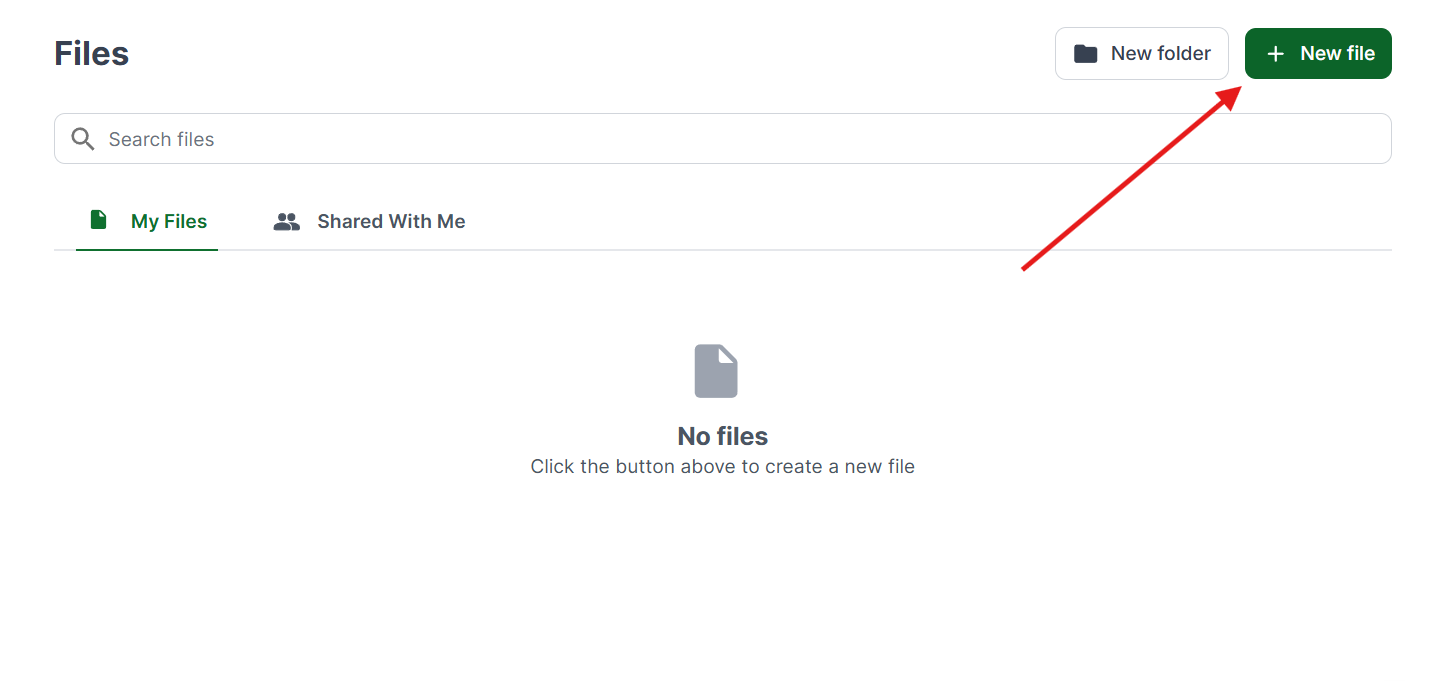
Once you're logged in, create a New File.
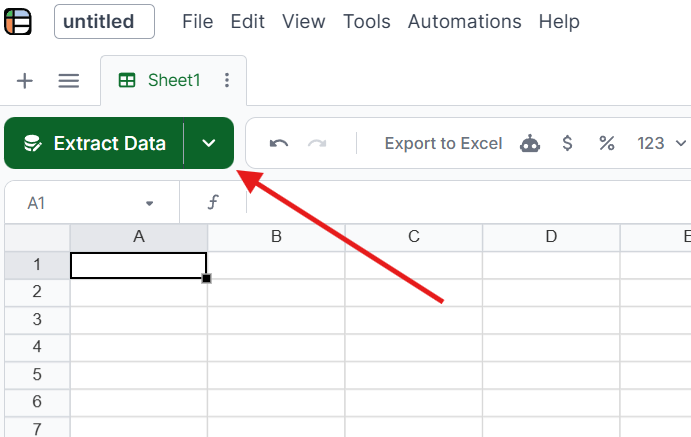
Select the Extract Data button at the top of the sheet.
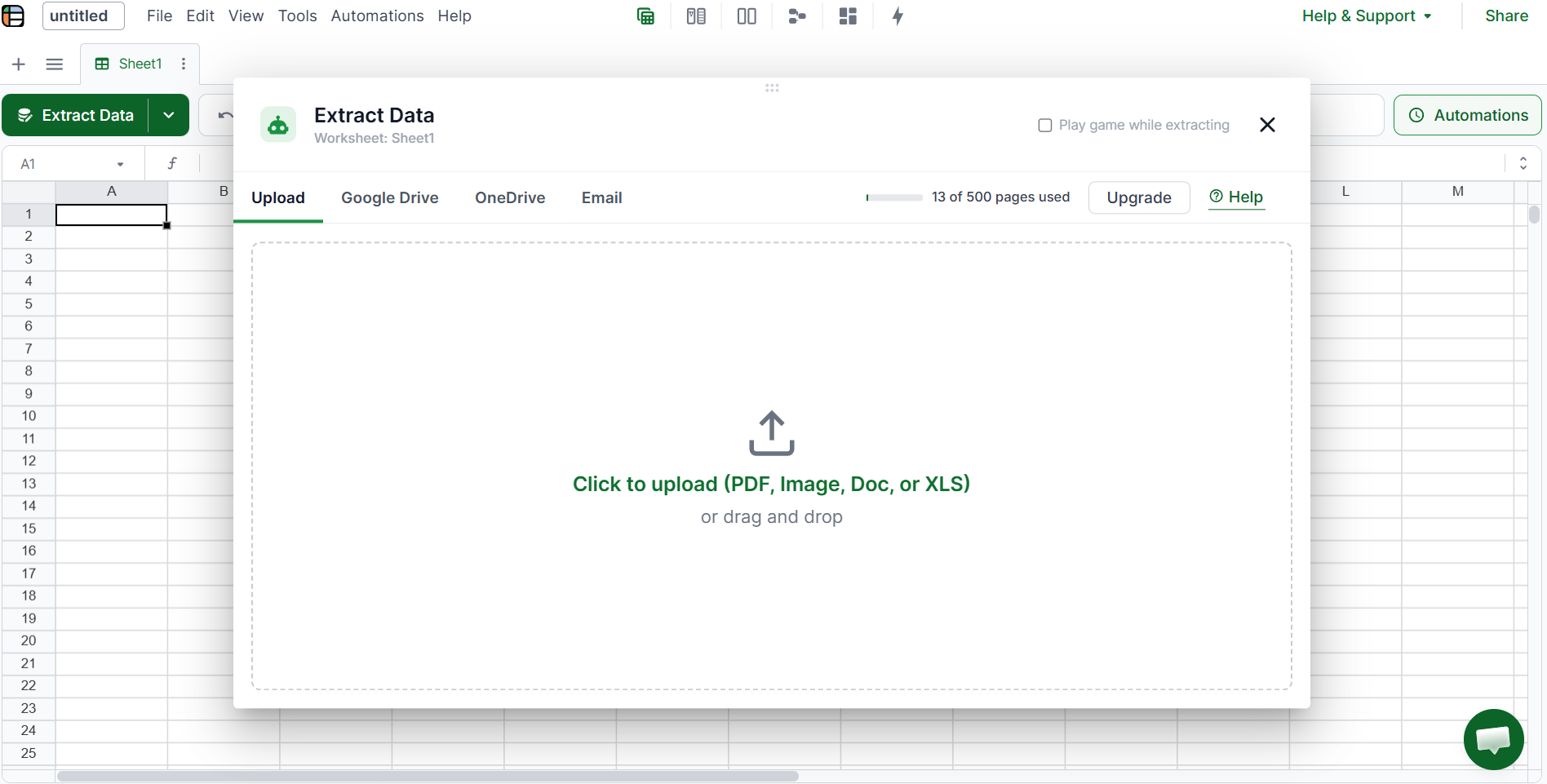
Drag and drop your PDFs into Lido, or click to browse. You can upload up to 100 files at a time, even if they all have different layouts.
For the purpose of this tutorial, we will be using a sample bank statement.
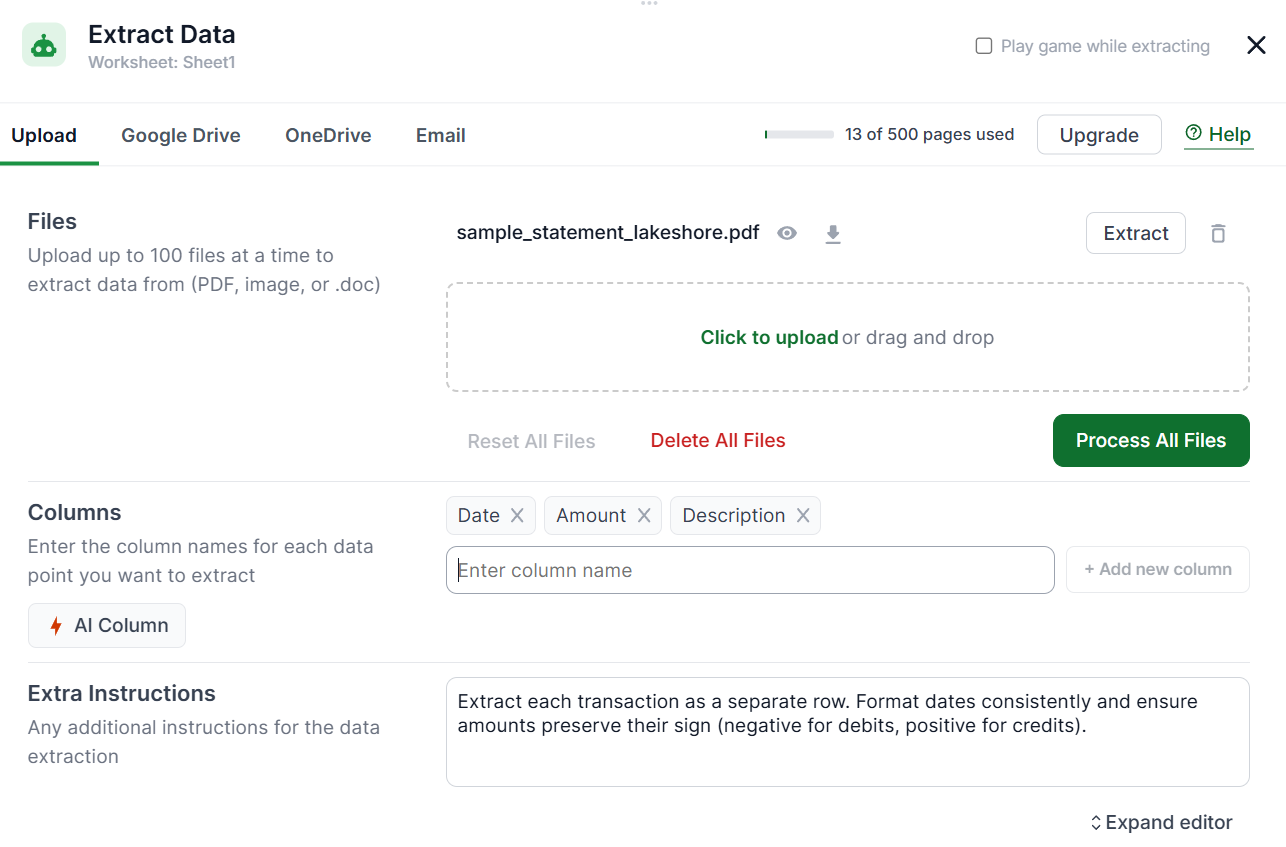
Type a column name for each field you want in Excel. For a bank statement, that would be Date, Amount, and Description. For a receipt, it might be Merchant, Date, and Total.
You can also add extra instructions if you'd like (this is optional), such as a date format or one row per line item. Once done, click Process All Files.
Review the extracted data to make sure it's in the format you need. You can edit cells, rename columns, or reorganize the data to suit your workflow.
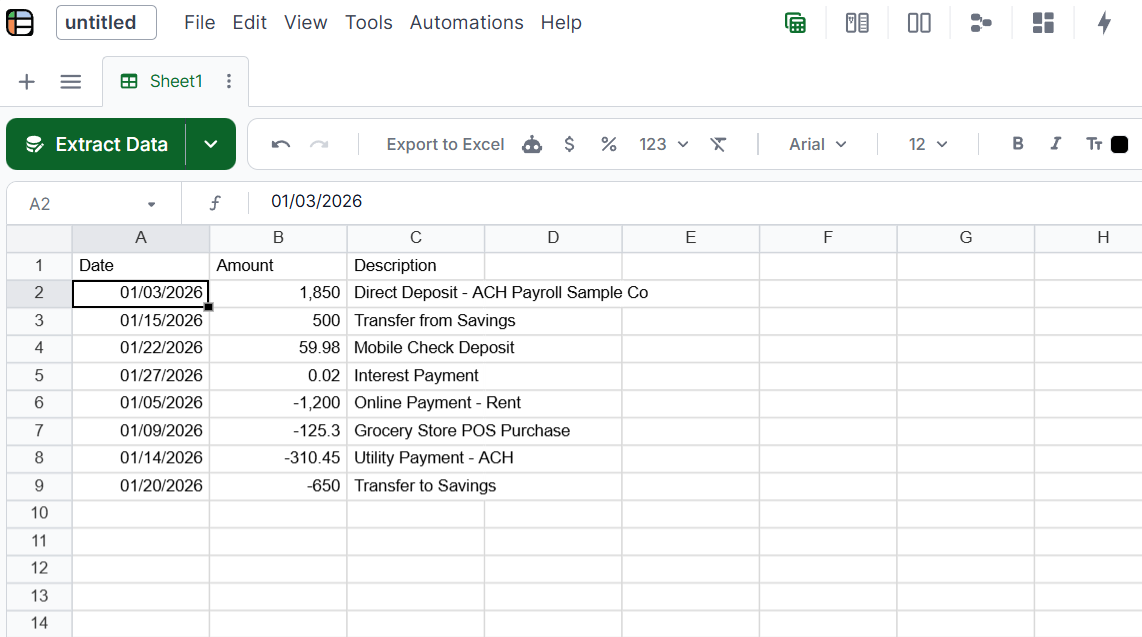
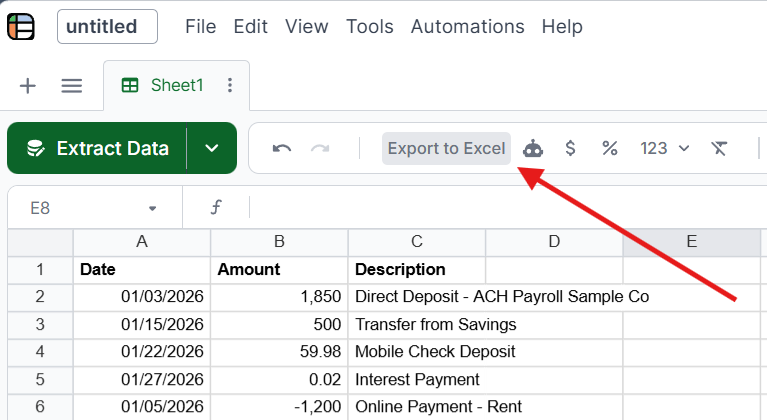
Click Export to Excel to download the data as an Excel file, with clean column headers and no blank rows to delete. If your team works in Google Sheets instead, there are also simple ways to get a PDF into Google Sheets.
Use this method when you want a table from your PDF in Excel exactly as it appears on the page.
Log into Lido and create a New File.
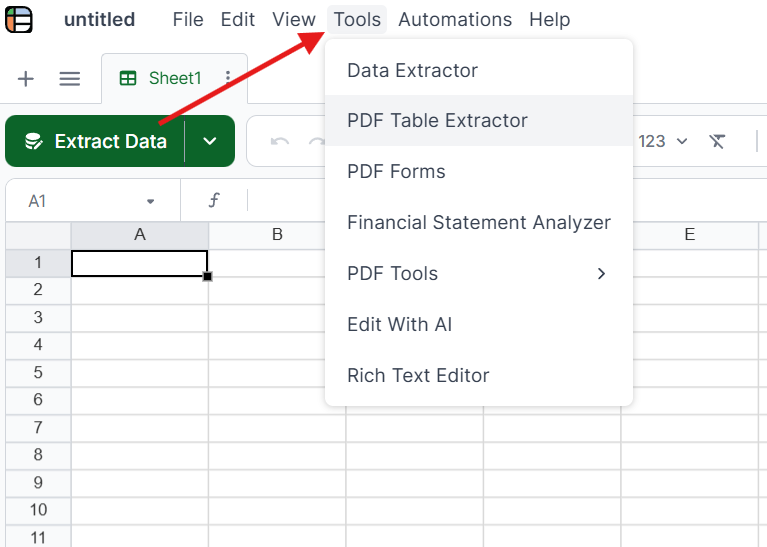
Click on Tools in the top menu and select the PDF Table Extractor.
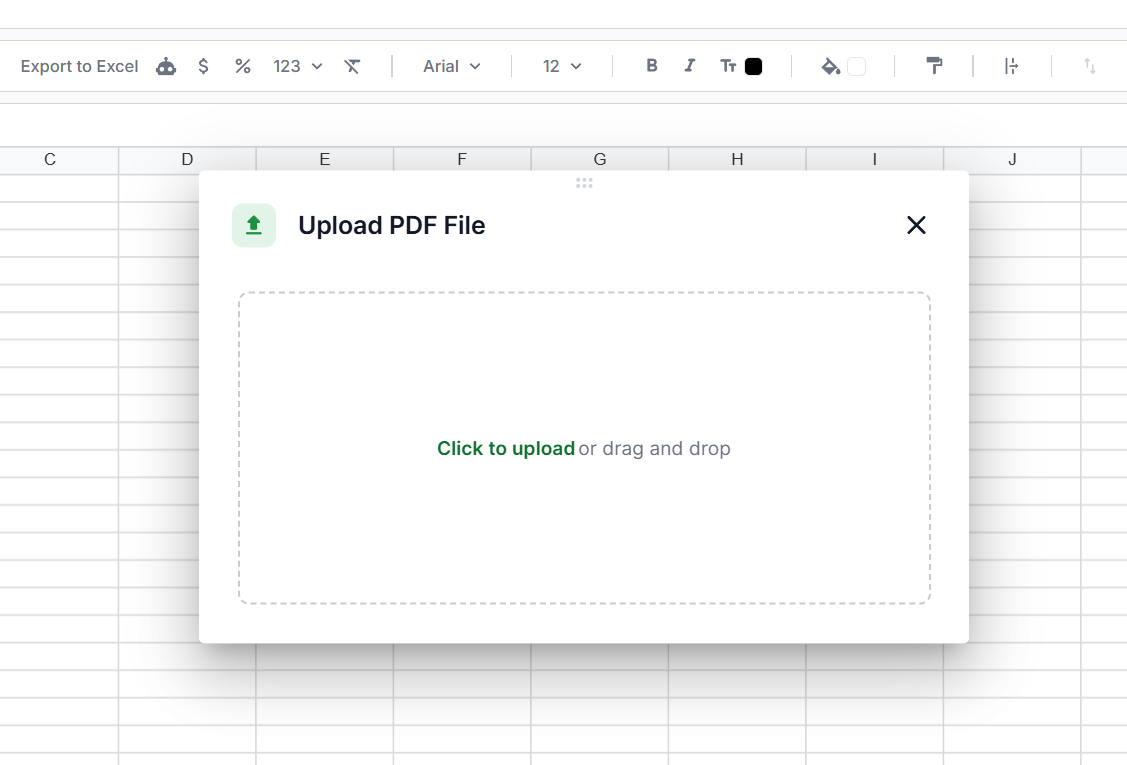
Drag and drop your file into Lido, or click to upload. Digital PDFs, scanned PDFs, and photos of paper documents all work.
Drag the selection box over the table you want in Excel, then click Extract Data.
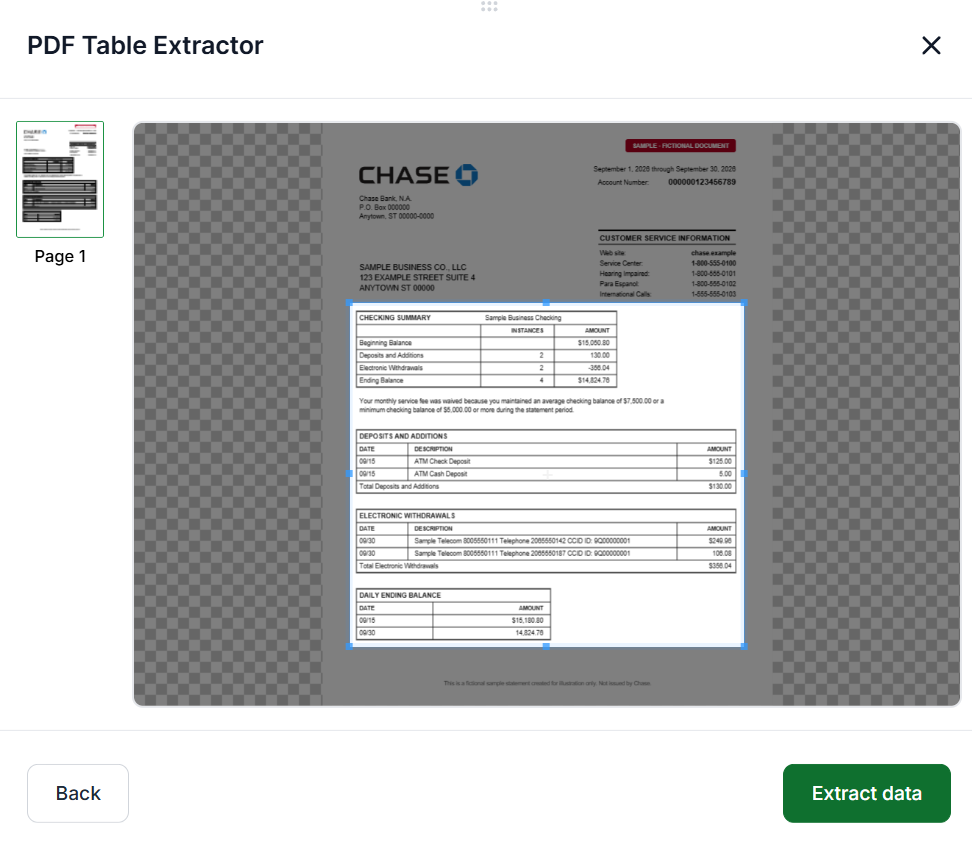
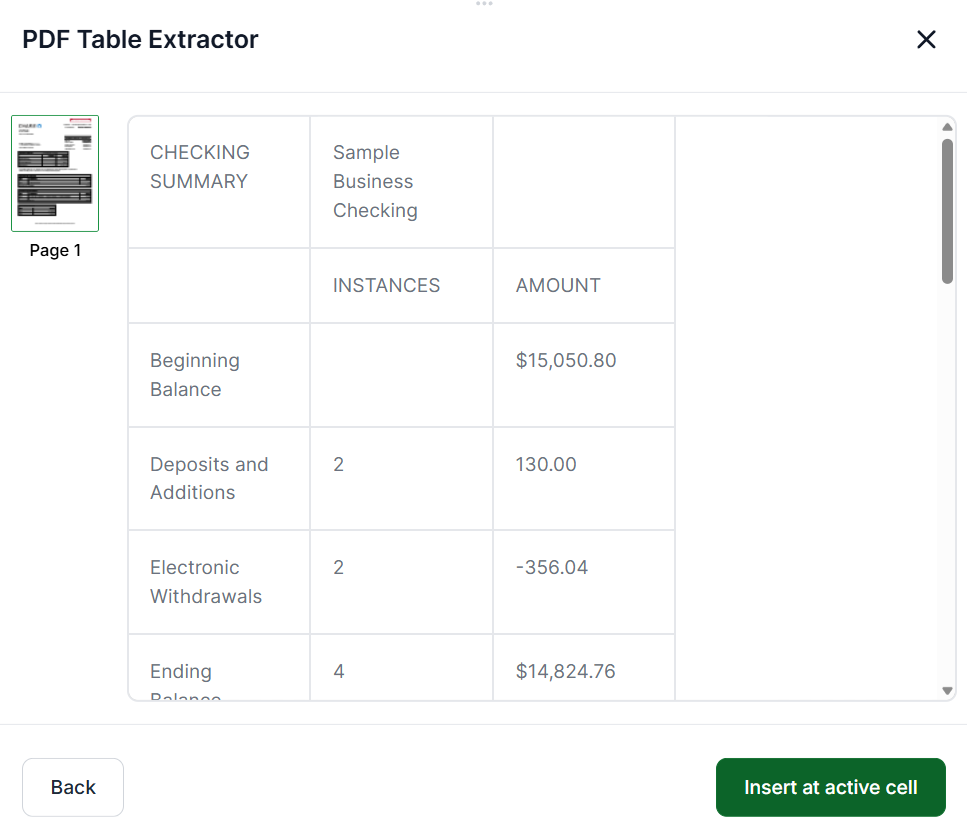
Check that the extracted table includes everything you need, or go back to adjust your selection. Then click Insert at Active Cell to add it to your spreadsheet.
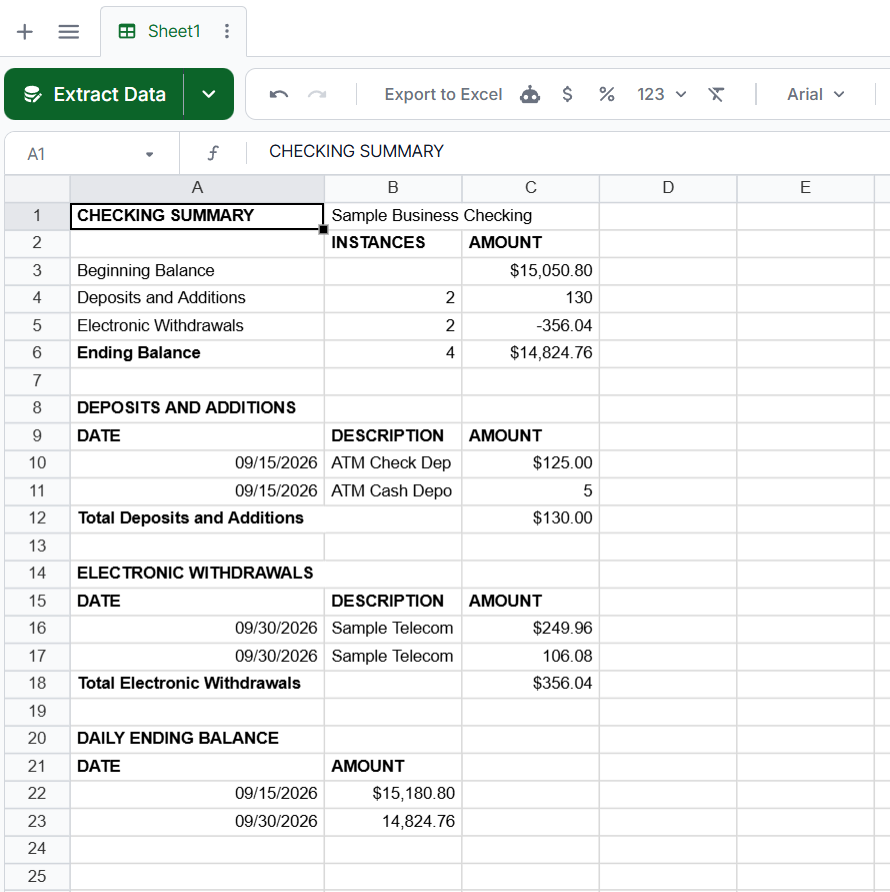
Edit and format the cells however you need, such as adjusting column widths or formatting amounts as currency.
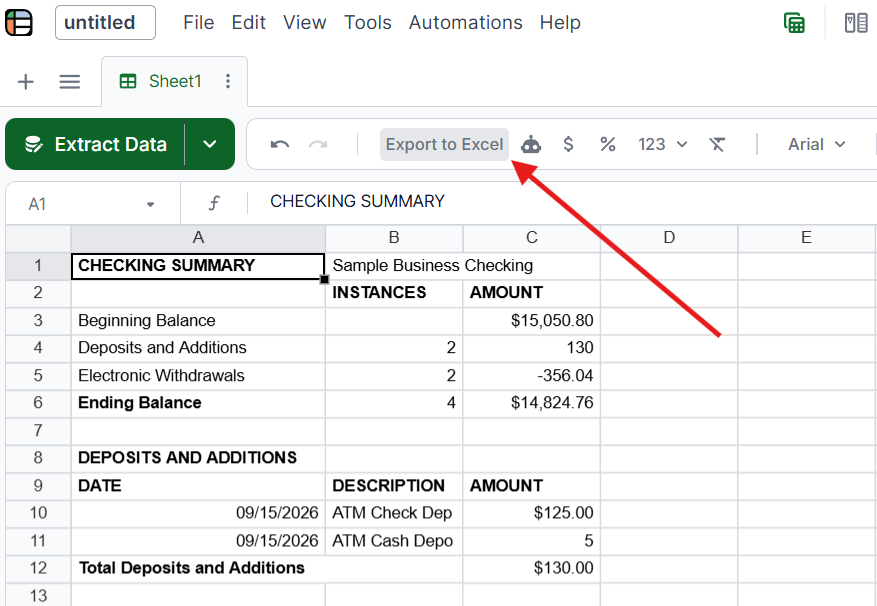
Click Export to Excel at the top to download the table as an Excel file.
If you extract data from PDFs to Excel every week, Lido can do it without manual uploads:
Connect a source: In the Extract Data window, connect a Google Drive folder, a OneDrive folder, or an email inbox.
Turn on Process Files: Lido checks the source every 5 minutes and extracts data from every new PDF using the columns you set up.
Turn on Export Results: Lido sends you an Excel or CSV file each day at a time you choose, by email or straight to a Google Drive or OneDrive folder.
Once it's set up, PDFs go in and Excel files come out with no one touching them.
These methods can handle simple PDFs, but each one breaks on harder documents:
Copy and paste: Fast and free, but tables paste as a jumbled block of text, and scanned PDFs have nothing to select.
Free PDF to Excel converters: Tools like Smallpdf and iLovePDF handle simple, single-page tables with clear borders. Borderless tables, multi-page tables, and scans usually need manual cleanup.
Adobe Acrobat Pro: Export PDF includes OCR for scanned documents and gives cleaner output than free converters, but it still struggles with complex tables and requires a paid subscription.
Python scripts: Libraries like pdfplumber and Tabula-py extract tables from digital PDFs, but they can't read scans and need code changes for each new layout.
Template-based parsers: You draw boxes around fields on a sample PDF, which works for one fixed layout. Every new layout needs its own template, and templates break when a sender changes their format.
Lido works in every scenario: digital PDFs, scanned pages, photographed documents, borderless tables, multi-page tables, merged cells, and inconsistent layouts. It's also SOC 2 Type II and HIPAA compliant, so financial, legal, and medical documents stay secure. For a full comparison, see our roundup of PDF to Excel conversion tools.
Now that you know how to extract data from a PDF to Excel, you can stop fixing broken spreadsheets and start working with clean data.
Upload the PDF to Lido and either enter the fields you need or select a table with the PDF Table Extractor. Lido extracts the data with the correct columns and rows, and you click Export to Excel to download it.
Connect a Google Drive folder, OneDrive folder, or email inbox to Lido and turn on Process Files. Lido extracts data from every new PDF, and Export Results sends you a daily Excel or CSV file.
Yes. Lido runs OCR automatically and understands the document's layout, so data from scanned PDFs exports to Excel with the correct columns and rows.
Lido is the best tool for extracting PDF data to Excel. It works on any document without templates, handles scanned and digital PDFs, and exports clean data straight to Excel.
Yes. Copy and paste, free online converters, and Python libraries like pdfplumber cost nothing, but they usually produce messy output on complex or scanned PDFs. Lido offers 50 free pages so you can test it on your own documents.
Open Lido's PDF Table Extractor, upload your PDF, and drag the selection box over the table. Lido keeps every row and column in place when you export the table to Excel.
%20(1).svg)
.png)
